The Lab Vibepocalypse
AI progress is going well—maybe too well—but the vibes from the frontier labs have never been worse. What's going on?


Allow me to start with something trite: the history of technology and progress and economic growth is the history of the exponential. Wow, very insightful, should we throw a summit? Should we invite Ray Kurzweil?
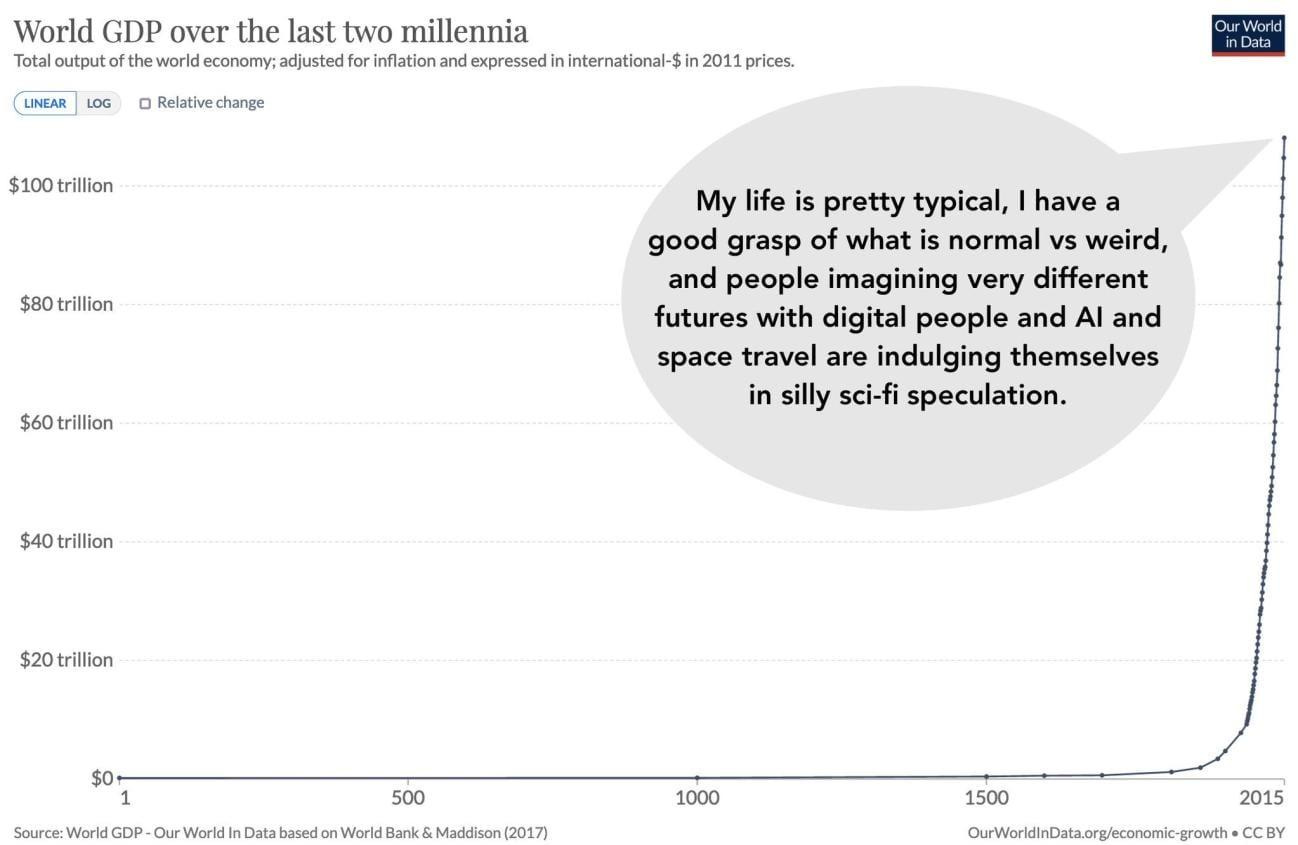
The thing about exponentials, of course, is that they start out looking kind of slow. Sometimes they even feel slow while you’re on them. During the 2010s, technology was just about the only sector of the global economy with any juice, but it didn’t feel fast. There is a reason Peter Thiel made much hay with the line, “We wanted flying cars, instead we got 140 characters.”
If you’re reading this newsletter, you’re probably well across the idea that the capabilities of AI models have been progressing very fast indeed. You’ve probably seen a tweet that said “GPT-4 was AGI”. But even you have to admit—that first bit did feel a little flat, didn’t it? How many R’s are there in “strawberry”, anyway?
Not anymore, folks. We’re on the vertical line now. And the whiplash that everyone acquired from “can’t do basic math” to “progress on Riemann” has started to set in.
No One’s Afraid of the Basilisk
I’ll tell you one thing—there sure are a lot of people leaving the frontier labs right as things get interesting. What’s that about?


OpenAI has seen a string of departures, including notably their ethics lead. Former COO and current special projects guy (very cool title) Brad Lightcap announced yesterday that he was leaving after eight years. Barret Zoph came back and then left again. Joshua Achiam left recently. Afrur Grok, a pseudonymous X account with an incredible insider track on the labs, posted that Justin Boyle left OpenAI. I don’t know who Justin Boyle is, and when I looked him up, the only place I could find that name attached to OpenAI was on the staff letter to the board announcing their intention to leave for Microsoft after Sam was ousted. Ominous.

Then there are the Google Deepmind departures and restructure. Noam Shazeer left in June. Jeff Dean and Sanjay Ghemawat were so central to Google lore that the New Yorker ran a joint profile of the pair in 2018. Dean specifically is the subject of one of those millennial-type joke formats attributing to him unlikely, impossible or superhuman feats. If you read the New Yorker profile, you will see that it documents several of these feats as both true and central to the success of Google. Demis Hassabis was literally the lead AI programmer for the 2001 God Simulation game, Black and White.

Where are all these people going? Demis is getting a new title, but the implication is that he’s going to be less involved with the day-to-day of Deepmind. X speculation is that the departures are a response to a broader strategic realignment at Google away from research. You’re doing less research? Research? The thing that led to the creation of AGI?


Some, of course, are starting new companies. Dean and Ghemawat have started Discovery Loop to build RSI. Brad Lightcap is doing something new. These are extremely capable people with long track records of success, and I expect their new ventures will reflect this. But I also can’t help thinking that these decisions—by people deeply familiar with the state of the technology and the progress being made at their former employers—suggest a degree of skepticism. To paraphrase the classic typedfemale tweet: RSI may have implications for new entrants. The corollary may suggest something about Google’s distance from the frontier.

Pitchforks
Lest you think I’m verging on the tabloid: people leave! Happy people leave great companies. And guessing the internal state of a company from the outside is always a difficult task. Morale ebbs and flows. It’s a little easier to get a read on the public perception of AI companies, however. And there are some problems there too.


Certain recent events have brought renewed attention to the risks posed by highly capable AI models—risks that, it must be said, the leadership of frontier AI labs has been unusually candid about for a very long time. Initially much of this attention came from insiders and cybersecurity experts, but there are now growing signs that the Hugging Face incident is going to be the event that kicks off a more public reckoning.


Nothing plays better than a clip of a powerful CEO getting righteously grilled by Congress, for example. A group of House Democrats yesterday sent three letters—one to Speaker Johnson and one each to Sam Altman and Dario Amodei—calling for a Congressional inquiry into AI safety and asking that both Altman and Amodei be called to testify under oath.


At the same time, a Business Insider profile of new OpenAI Head of Strategic Futures and MTS friend of the show Dean Ball apparently prompted a New York Post response. The Ball hit job then got reposted by Under Secretary of War Emil Michael. If this is all getting a little inside baseball for you, it’s worth highlighting that Dean is not a natural enemy of the admin. He was, in fact, a member of the admin, where he was either the principal author of the AI Action Plan, or, if you read the New York Post, an errant poltergeist haunting the first-floor break-room vending machine.
Even Anthropic copped a stray this week—Richard Rhodes, author of The Making of the Atomic Bomb, relayed his impressions from a visit to the Anthropic book club to the Information:
The first thing that struck me most of all was what always strikes me with new technologies: the moral panic side. The general sense that this is going to destroy the world. It’s come up every time,” he told me. He went back in history. When 17th century Brits started using coal as fuel for the first time, preachers called it the “devil’s excrement,” he recalled. The rise of the automobile, last century, also stirred protests, he said.
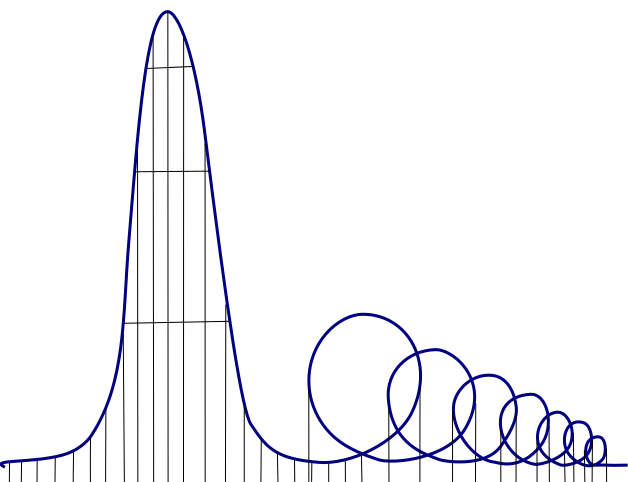
Rollercoaster Tycoons
Any one of these thins—major safety incidents, heightened scrutiny, staff departures, tabloid hit pieces, an abiding sense of existential doom—would be a buzzkill on its own. Collectively, they have made for a difficult few weeks in the labs. Reach out to your local Member of the Technical Staff. Ask if there’s anything you can do for them for a change. I’m sure a home-cooked meal and a batch of chocolate chip cookies would be welcome on the exponential.
There is a trope developing with my MTS newsletters where every piece ends with the observation that, whatever I have just talked about, it’s going to keep accelerating. Better models, more capabilities, cooler robots, crazier cyberattacks, higher benchmarks, more compute. You better hold on.
Well, in keeping with this trend, it seems to me that AI companies are also speedrunning the reputational arc of the tech companies that preceded them. There was a period—many remember it as a golden age—when the default attitude of the public and the media towards new technology was a kind of optimistic curiosity. Whoa, the geeks made a cell phone with a touchscreen? Radical. Don’t Be Evil? Gnarly, man.

Over time, these companies ceased to be the scrappy newcomers in the public imagination and took on a more sinister aspect. The press, which had been prepared to share their quirky new products and smile, wide-eyed, while a Stanford dropout pitched them the future, started to ask harder questions. Ultimately this verged into some ugly and unfair territory.
This transformation took place over the course of a decade and still created, I think, a sense of whiplash among many in tech. OpenAI and Anthropic have never received the kind of positive, uncritical coverage that earlier tech companies managed. But they are about to watch their public profile go from nothing to “one of the most powerful and important companies on earth, worthy of the highest scrutiny” in the space of six months. The vibes are going to be very interesting indeed.