
7/6: J-Spaces
Plus: New Illinois AI law, China shuts down AI companions, SK Hynix lists in the US, new Broadcom x Apple partnership, MTS x Databricks World Cup drop

Happy Fourth of July weekend, monitors. I hope you took some time to really internalize what a crazy run this country has had over the last 250 years, from interchangeable parts to the assembly line to the Moon landing to frontier machine intelligence — to say nothing of our cultural power, like hosting the World Cup and playing the Round of 16 game against Belgium tonight in Seattle. Until then, be sure to catch us on X and YouTube, and join our Discord to chat with our hosts live.
Today’s Experts
Rob Henderson (Manhattan Institute)
Jeff Keller (Capelight Partners)
Jay Schwarz (Chief, FCC Space Bureau)
Making Sense of the World
Anthropic discovers a J-space inside Claude where it holds internal thoughts. If you ask Claude “what is the color of the fourth planet from the sun?”, it knows the answer is “red” even without outputting “Mars”. It actually does think about Mars, just in its J-space, a portion of its internal neural activations where it holds “thoughts” before outputting a final answer. If you ask it to write a sentence while thinking about citrus fruits, the J-space contains words like “orange”, “fruits”, and “imagery”. This is extremely helpful for interpretability, as it allows us to identify (albeit imperfectly) if a model is aware it is being evaluated, or if it’s lying. It’s incredibly cool how many functions of our brains, like conscious thoughts that we don’t verbalize, have equivalents inside LLMs.
Illinois Gov. JB Pritzker signs the AI Safety Measures Act (SB 315) into law. The law defines “catastrophic risks” as foreseeable and material risks that a frontier model (one trained with over 1026 FLOPs) will materially contribute to over 50 deaths/injuries or over $1B in damage in a single incident via CBRN, criminal autonomous conduct, or loss of control. Large frontier developers are required to implement a frontier AI framework explaining how they manage risk, publish transparency reports, report critical safety incidents, maintain whistleblower protections, and, for the first time, submit to mandatory third-party safety audits. The law is narrower in scope than others like the EU AI Act and the failed California SB 1047 from 2024. It was endorsed by OpenAI and Anthropic, and passed 110-0 in Illinois’ state House and 52-5 in the Senate.
SK Hynix begins $28 billion US listing. The South Korean memory manufacturer, now worth over $1 trillion due to the AI boom, is launching one of the largest US offerings in history, and is already oversubscribed. Top investors include Baillie Gifford, Coatue, and Situational Awareness LP. Both retail and institutional investors are really, really bullish on AI.
China is cracking down on AI companions. ByteDance, Alibaba, Tencent, and other Chinese AI giants will have to shut down or restrict AI companion features as new regulations come into effect. On top of ordinary Chinese censorship, AI providers are now banned from inducing emotional dependence or addiction in users or manipulating them into making unreasonable decisions against their interests. They must implement a minors’ mode with parental controls, and may not offer any virtual romantic partners to minors. They are also required to conduct security assessments to ensure cybersecurity and intervention for at-risk users.
Broadcom and Apple announce a compute partnership through 2031. Broadcom will help Apple design ASIC (application-specific integrated circuit) chips for Apple’s current and upcoming devices, as well as new server chips for Apple datacenters to help them power Apple Intelligence. Despite Apple’s relative lack of capex compared to other big tech companies (and lack of any internal frontier lab), they still own and operate most of the infrastructure stack behind Siri.
A new $29 billion AI supply chain materials company forms out of the merger of Solstice and Element. The company will offer refrigerants, performance materials, packaging and thermal management, cooling, and more. The semiconductor supply chain is vast and complex, and niches that you have never heard of and would never have thought about can be worth many billions.
Small firms are replacing enterprise SaaS with vibecoded clones. Small and medium-sized businesses around the world, faced with annual enterprise software bills in the tens or hundreds of thousands, are often finding it simpler to just build the functionality they need themselves with Claude. As it gets easier and easier to clone Salesforce CRM or other highly valuable proprietary software, traditional enterprise software companies will need to find new ways to keep their high valuations.
Trump Accounts are now live. Any American child born 2025-2028 gets $1,000 deposited into a tax-advantaged custodial investment account that they get access to at age 18. They or their parents can contribute up to $5,000 per year, allowing them to take advantage of compounding returns for two decades more than most people. Donors include Dell CEO Michael Dell, hedge fund billionaire Ray Dalio, SpaceX President Gwynne Shotwell, and companies including Uber, Mastercard, BlackRock, Visa, Charles Schwab, SoFi, Chipotle, and Robinhood.
Today’s Drop
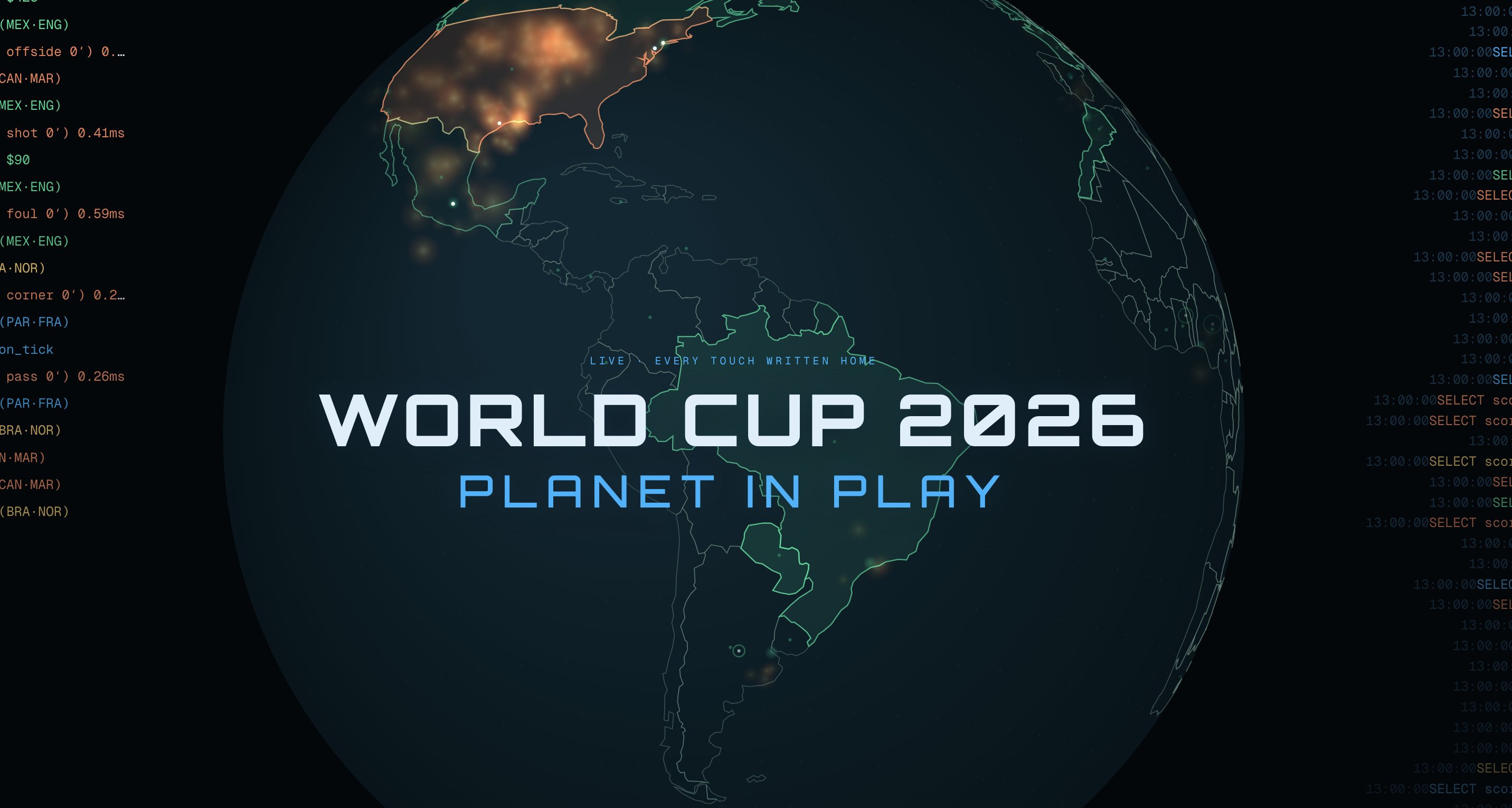
When someone scores a goal at the World Cup, a lot has to happen to instantly propagate the information of a ball hitting a net in Seattle to billions of football fans worldwide. Databases are what make the complex computing behind it possible.
We built a drop alongside our sponsor Databricks to show what really goes on inside the databases that keep track of the world’s top tournament. Check it out at drops.mts.now/worldcup.
Banger Review


