6/30: The Midwit Frontier
Claude Sonnet 5, Claude Science, Nano Banana 2 Lite, OpenAI cuts inference costs, Fable might actually come back this time?

Happy Tuesday, monitors. We’re back into politics, with Under Secretary of State Jacob Helberg joining us from Washington, DC. Be sure to catch us on X and YouTube, and join our Discord to chat with our hosts live.
Today’s Experts
Ernie Tedeschi (Stripe Economics)
Jacob Helberg (Under Secretary of State for Economic Affairs)
Meltem Demirors (Crucible Capital)
Gavin Uberti and Robert Wachen (Etched)
Duncan Umphrey (Palladium Magazine)
John Severini (Georgetown Initiative on AI and Democratic Citizenship)
Nancy Davis (Quadratic Capital)
Ben Pouladian (BEP Research)
Charles Foster (METR)
Daniel Saedi (Minerva)
Making Sense of the World
Claude Sonnet 5
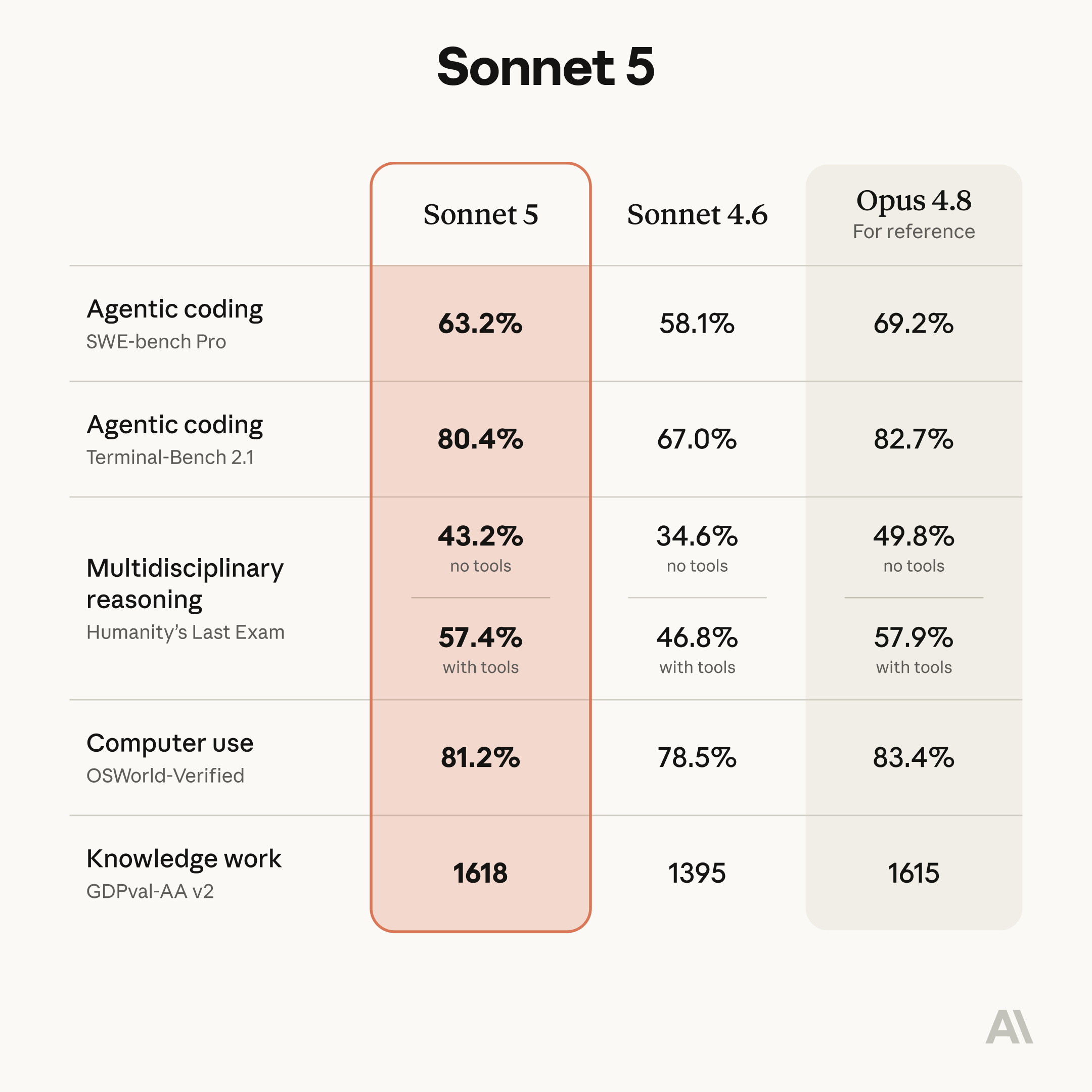
At long last, a new 5-series model from Anthropic! Is Fable 5 back? Not yet. Do we have Opus 5? Also no. Instead, we get a Sonnet upgrade for the first time since Sonnet 4.6 in February.
The benchmark scores are pretty solid, a measurable jump over Sonnet 4.6 (especially on agentic coding and Humanity’s Last Exam), and even eclipsing Opus 4.8 on GDPval, a suite of economically valuable tasks designed to test models’ performance on real-world jobs. It’s cheaper (at least until August 31), at $2/$10 per million input/output tokens, compared to $3/$15 for Sonnet 4.6, though it’s still much more expensive than GLM-5.2 ($1.40/$4.40) and DeepSeek-V4 Pro ($0.43/$0.87). It has a new xhigh reasoning effort in between high and max, and has better vision. It uses a new tokenizer that increases performance at the cost of some token efficiency, but the promotional price is meant to offset this.
The bad news is, we may be seeing the end of unregulated public model progress. In the last month, we’ve seen unprecedented government interference in AI releases, from export controls on Fable to blocking the release of GPT-5.6 entirely. It’s quite possible that Anthropic has an Opus 5 ready to go and isn’t releasing it (yet) because it isn’t worth the hassle. It’s also possible Opus 5 exists and is being actively evaluated by the government.
Either way, we are no longer in the regime where labs release new capabilities almost as soon as they have them. Progress inside the labs continues apace, while external progress lags behind. There will continue to be subtle improvements to Sonnet-tier models, but nothing better than GPT-5.5 or Opus, and in sensitive areas like bio and cyber, the capabilities of the models will be deliberately nerfed. This is possibly actively dangerous: if labs’ internal deployments get too far ahead of their external deployments, we’ll see increased loss-of-control risk and concentration of power, and less time for society to adapt.
It may make sense to shut down models when they reach a capability level so great that it would be seriously dangerous to release them even with others defending against them, like if they could fully autonomously design a novel pathogen as transmissible as COVID and as deadly as Ebola. But Mythos-class models are just not that dangerous, and so it stands to reason that our normal standards of technological liberty should apply1. If not, the public might be stuck on the “midwit frontier” for a while.
More Stories
Fable might actually come back tonight, per Politico reporter Sophia Cai, citing a senior White House official.
Anthropic announces Claude Science, a new desktop app allowing scientists to accelerate and automate tasks. It comes with dozens of skills and connectors in fields across biology from genomics to cheminformatics. It can produce rich scientific artifacts, manage compute, perform literature reviews, and a lot more. It’s still in early beta (and opens as a localhost tab in your browser), but we’re excited to see how it evolves over time.
OpenAI reportedly cuts inference cost in half after finding a major efficiency improvement. This could mean lower costs or higher rate limits for users, better performance for models, or higher gross margins for OpenAI, a major boon in their battle against Anthropic.
Chip startup Etched comes out of stealth and raises $800 million. Etched makes inference clusters with co-designed chips, racks, software, and manufacturing, and claims SoTA performance on both latency and throughput. They have an incredible investor lineup. Competitors include MatX, Groq (not Grok), and Cerebras.
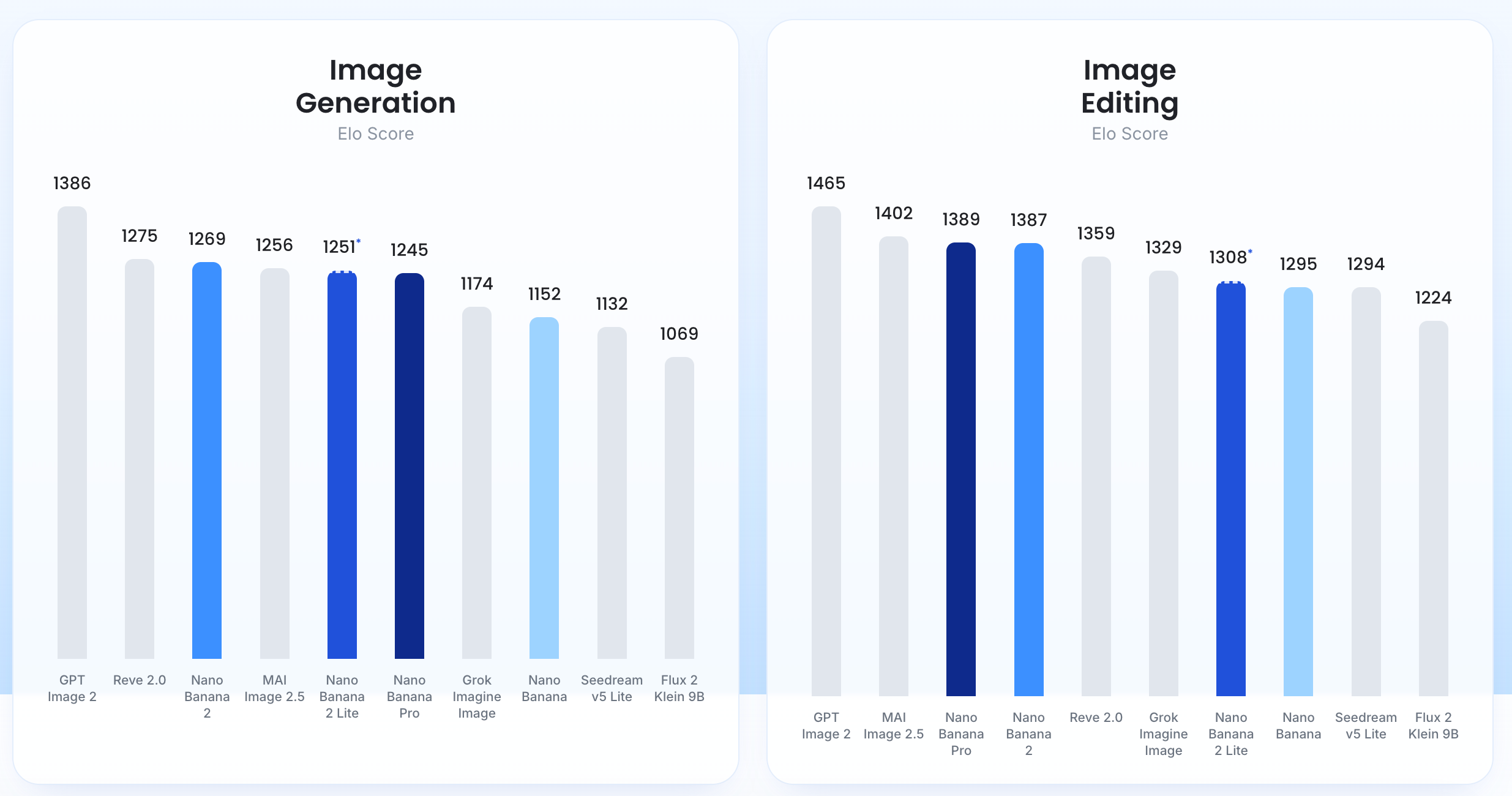
Google releases Nano Banana 2 Lite and Gemini Omni Flash, its newest image and video models. They claim near-SoTA performance2 with substantially lower cost and latency. GPT-Image 2 still leads the category on both.
AWS launches a forward deployed engineering division with $1 billion in initial funding, following OpenAI, Anthropic, Google, and other companies into the FDE revolution.
Call center stocks are down due to AI. Due to realtime voice AI agents like Sierra, it might finally be the end of the call center business. Our guest Ernie Tedeschi, the Chief Economist at Stripe, recently wrote an article on a similar occupation, travel agents, where employment structurally declined over time as the underlying technology shifted. The good news for jobs is that a new study has found that businesses that adopt AI more also substantially increase headcount.
Banger Review


This doesn’t necessarily mean these capabilities should be open-sourced, or released without safeguards baked into the model. It just means that the government shouldn’t strongarm AI labs into blocking the release of these capabilities entirely, or limiting them to a handful of pre-approved “trusted partners”.
Google published this comparison of Nano Banana 2 and 2 Lite with other models:
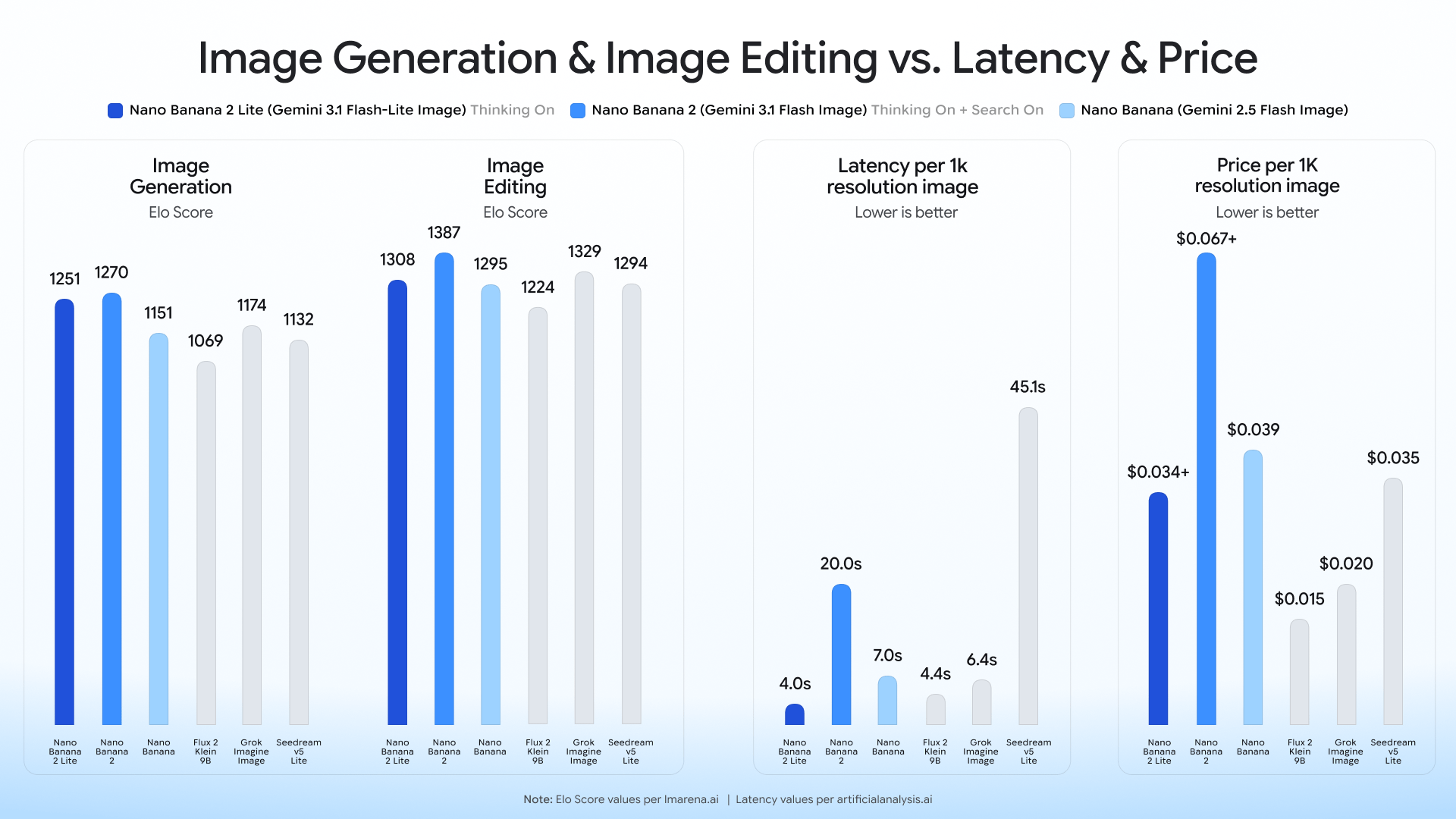
but conveniently forgot to include GPT Image 2 and other competitors, which would make the graph look like this.